
Technical Skills
The Tools Behind the Work
A certificate, on its own, is a record of completion. What gives it weight is the context in which the learning was pursued, the competency it validates, and the extent to which it has been put to work in real professional environments. The certifications presented on this page are not decorative credentials accumulated for their own sake. Each one represents a deliberate investment in a domain that is directly relevant to how I work — and, in most cases, to knowledge I was already applying in practice before I formalised it through examination.
Project Management Tools & Methodologies
The methodological foundation of my project management practice rests on three frameworks applied with deliberate intent rather than dogmatic adherence:
Lean Six Sigma (Black Belt) provides the analytical rigour for process measurement, defect identification, and systematic improvement. It is the framework I reach for when the problem is rooted in variation, waste, or process inefficiency.
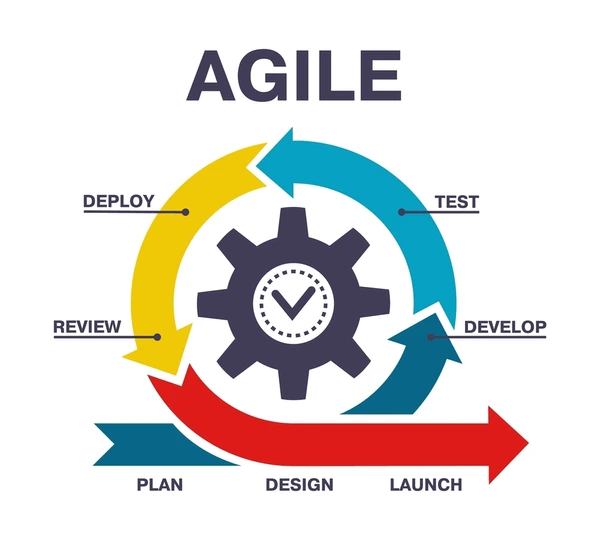
Agile and Scrum provide the structural scaffolding for iterative, cross-functional delivery — sprint planning, backlog management, retrospective-driven refinement, and the kind of adaptive responsiveness that complex projects require.
Kaizen 5S disciplines the physical and digital workspace: sort, set in order, shine, standardise, sustain. It is deceptively simple and consistently effective, particularly in production environments and web project workflows where accumulated disorder is the invisible drag on team performance.
For day-to-day project execution, I work with Asana (certified at Expert level) and ClickUp (certified at Expert level) for task and project management, Miro for collaborative planning and visual mapping, Microsoft Power BI for reporting and performance dashboards, and Google BigQuery for large-scale data querying and analysis.
Certifications: Lean Six Sigma Black Belt, ISO 9001:2015, ClickUp Expert Level, IBM Project Management Fundamentals Tools: Asana, ClickUp, Miro, Microsoft Power BI, Google BigQuery
Data & Analytics
My data skills are oriented toward practical decision support rather than data science for its own sake. I work with Microsoft Power BI to build dashboards and reports that surface the metrics relevant to project performance and operational quality. Google BigQuery enables me to query and structure large datasets in contexts where conventional spreadsheet tools are inadequate.
At a foundational level, I hold IBM Data Fundamentals certification, which underpins my understanding of data modelling, data quality, and governance principles. I have working knowledge of Tableau (Salesforce) and Looker (Google) — sufficient to interpret and contribute to analytics environments built on these platforms, while being transparent that these remain areas of active development rather than primary expertise.
Core tools: Microsoft Power BI, Google BigQuery Working knowledge: Tableau, Looker Certification: IBM Data Fundamentals
Quality Systems & Technical Inspection
Quality engineering is a technical discipline as much as a managerial one. My hands-on background includes source code testing and integrity validation at Ericsson, Six Sigma system implementation in a manufacturing environment at Power Wave Technologies, and the design and enforcement of repair quality standards at Swappie.
I work with ISO 9001:2015 as both a quality management standard and a practical framework for process design and auditing. Root cause analysis — using structured methodologies such as 5 Whys and fishbone diagramming — is a routine tool in my quality practice, not a reactive measure applied after significant failures. I develop quality documentation that is audit-ready, operationally useful, and written at a level of precision that leaves no room for interpretive ambiguity.
Certification: ISO 9001:2015, Lean Six Sigma Black Belt (DMAIC methodology) IBM Cybersecurity Fundamentals — complementary awareness of security risk management within quality and infrastructure contexts
Web Development
My web development practice is platform-focused and production-oriented. I work primarily with WordPress and WooCommerce for content-driven and e-commerce sites, and with Magento 2 for more complex commercial environments that demand greater architectural control. Custom PHP-based solutions complement both, particularly where out-of-the-box functionality falls short of business requirements.
On the front end, I build with responsiveness and performance as baseline constraints, not afterthoughts. I integrate third-party services — payment gateways, CRM connectors, analytics layers, marketing automation tools — and approach each integration with an eye toward maintainability and security as well as immediate functionality.
I am also prepared to extend this work into Shopify as project requirements evolve. My broader awareness of the Adobe Experience Manager ecosystem and its content governance and automation capabilities reflects an ongoing interest in enterprise-grade content platforms.
Core platforms: WordPress, WooCommerce, Magento 2, custom PHP Adjacent readiness: Shopify, Adobe Experience Manager
Web Server Administration
Server administration is where development decisions meet operational reality. My primary environment is WHM/cPanel running on AlmaLinux, CloudLinux, and Rocky Linux, and my command of this stack is formally validated through a comprehensive set of certifications:
- cPanel & WHM System Administrator I & II
- cPanel Professional
- cPanel Certified Partner Accreditation
- WHM Administration
- cPanel & WHM Sales Professional
- Imunify360
- LiteSpeed Web Server
- JetBackup 5
In practice, this means I configure and harden server environments, manage multi-site hosting architectures, administer database layers including charset migrations and foreign key integrity, implement Redis caching for performance-critical applications, and respond to security incidents with a structured, documented approach. I work with Imunify360 and ClamAV for threat detection and remediation, and apply security hardening protocols aligned with emerging CVE disclosures.
Performance tuning — PHP configuration, database query optimisation, caching strategy, and CDN integration — is a routine part of my server work, not an occasional intervention.
Operating systems: AlmaLinux, CloudLinux, Rocky Linux, Ubuntu Linux, Microsoft Windows Key technologies: WHM/cPanel, Redis, LiteSpeed, Imunify360, JetBackup 5
DevOps
My DevOps practice centres on the principle that reliable infrastructure is not an outcome of careful manual management — it is the result of well-designed automation, clear process documentation, and systematic monitoring. I design and maintain CI/CD pipelines that reduce deployment friction and make release processes consistent and repeatable. Version control, automated testing, and containerisation form the structural backbone of this approach.
I bridge the gap between development and operations by ensuring that both sides operate from shared, accurate documentation — a discipline that prevents the accumulating technical debt that arises when these functions diverge. Proactive monitoring, structured incident response, and rollback planning are integral to how I manage production environments.
Backup and recovery: Veeam Cloud environments: Google Cloud, Google Workspace, Microsoft 365
SEO & Digital Performance
Technical SEO is a discipline I approach analytically. Using Ahrefs, Semrush, and Screaming Frog SEO Spider, I conduct structured audits that identify crawlability issues, indexation problems, site architecture inefficiencies, Core Web Vitals deficiencies, and on-page optimisation opportunities. Audits translate into prioritised remediation roadmaps, not unstructured lists of recommendations.
I understand the relationship between server configuration, page performance, and search visibility — which means my SEO work extends naturally into technical interventions at the infrastructure level: caching configuration, server response optimisation, HTTPS implementation, structured data markup, and canonical URL management.
Tools: Ahrefs, Semrush, Screaming Frog SEO Spider
SAP & Enterprise Resource Planning
My SAP knowledge positions me to operate effectively in organisations where ERP systems form the backbone of operational data management. I understand how SAP S/4HANA and the broader SAP ecosystem centralise data across finance, supply chain, HR, and procurement functions — and how this architecture shapes the information flows that project managers and quality engineers depend on.
I have completed SAP Cloud ERP onboarding and SAP Business Data Cloud positioning certification, giving me a working orientation to enterprise deployment contexts and the strategic considerations that surround ERP implementation and migration projects.
Certifications: SAP Cloud Onboarding for SAP Cloud ERP, Positioning SAP Business Data Cloud
Hardware Diagnostics & iPhone Repair
Component-level hardware diagnostics represents a technically demanding discipline that requires both systematic methodology and finely calibrated hands-on skill. My experience encompasses the full diagnostic and repair cycle for iPhone devices: disassembly and reassembly, component identification and testing, fault isolation across display, camera, battery, charging IC, audio, and logic board systems, and quality grading against defined cosmetic and functional standards.
Beyond repair execution, I have designed the documentation and training systems that make repair operations scalable — grading frameworks, troubleshooting decision trees, repair procedure guides, and quality control checklists that function consistently regardless of individual technician experience level. This combination of technical depth and systematic documentation is what distinguishes a repair expert from a repair technician.
Languages as a Technical Asset
Estonian, Russian, and English — full professional fluency in all three. In technical contexts, multilingual capability is not merely convenient. It determines whether documentation can be produced without translation overhead, whether training can be delivered directly to a diverse workforce, and whether technical communication with international vendors, clients, and colleagues retains its precision rather than losing it through intermediary interpretation. All three languages are available for technical documentation, training delivery, and professional correspondence.
Continuous Learning
The technical landscape shifts faster than any static skill set can accommodate. My approach to this reality is deliberate self-directed learning, pursued consistently alongside professional practice. The certifications listed throughout this page — spanning project management, server administration, data fundamentals, cybersecurity, SAP, and quality systems — reflect an ongoing commitment to building and validating competence rather than relying on the momentum of past experience.
I keep active awareness of developments in areas including AI-assisted workflow automation, enterprise content management, and cloud-native infrastructure — not as abstract interests, but as domains with direct relevance to the work I do and the directions in which it is evolving.